Motels for Sale in BC: A Buyer's Guide to British Columbia Motel Investments
Why Motels for Sale in BC Are a Smart Investment
British Columbia's motel market offers some of the province's most accessible entry points for hospitality investors. While large hotels command premium prices in Metro Vancouver and Whistler, motels provide proven cash flow, lower acquisition costs, and diverse revenue opportunities across the BC Interior, the Okanagan, the Kootenays, and highway corridors connecting BC to Alberta and Alaska.
Whether you are a first-time hospitality buyer seeking a manageable asset, an investor looking for recurring revenue, or an owner-operator ready to run a community-rooted business, this guide covers everything you need to know about buying a motel in British Columbia.
This article is for educational purposes only and does not constitute financial, investment, or real estate advice. Verify current market conditions, regulatory requirements, and property details with the original sources and qualified professionals before making any decision.
What Is a Motel in British Columbia?
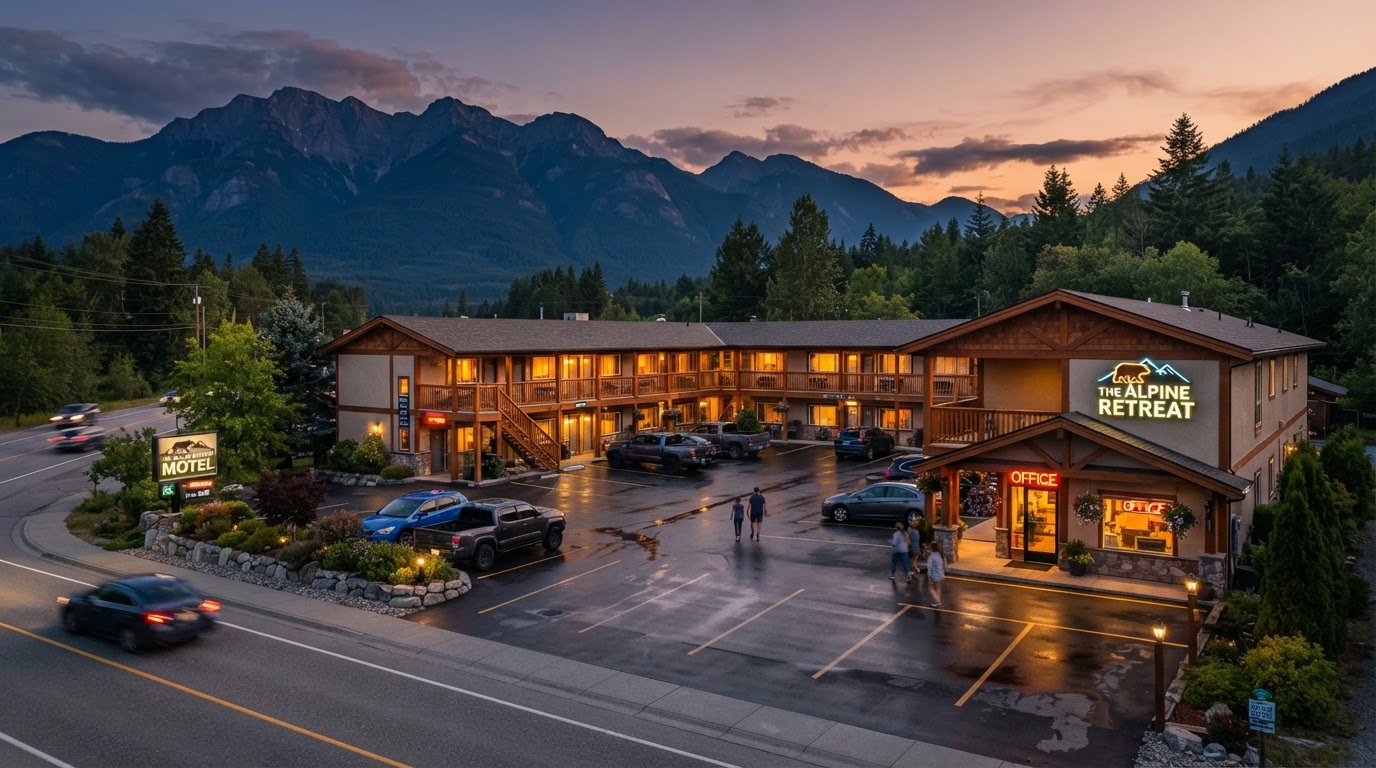
In BC real estate, a motel is a hospitality property where guest rooms are accessed directly from an exterior walkway or parking area, rather than from an internal hallway. Motels are typically one or two stories, range from 10 to 60 rooms, and often include on-site owner-operator accommodation. Many BC motels include complementary revenue streams — a restaurant, pub, liquor-licensed lounge, conference room, fuel stop, or RV parking — that diversify income beyond nightly room rentals.
Motels differ from hotels in three key ways that matter to buyers:
- Lower acquisition cost: A 20-room BC Interior motel may sell for $500,000–$2 million, compared with $5–15 million for a comparable branded hotel.
- Owner-operator model: Many motels are priced to reflect an owner or family living on-site, reducing labour costs and increasing operator oversight.
- Highway and community demand: Motels serve travellers, workers, and locals — demand that persists through economic cycles.
BC Motel Market Overview
British Columbia's tourism sector generated over $22 billion in revenue in recent years, and the BC Interior and Okanagan continue to draw record visitor numbers. BC is forecast to record the fastest provincial hospitality CAGR in Canada through 2031. For motel buyers, this translates into durable demand across both leisure and workforce accommodation segments.
Several factors are shaping the BC motel market:
- Post-pandemic tourism recovery: Domestic and US visitor numbers have returned to and exceeded pre-2020 levels across the Okanagan, Kootenays, and Vancouver Island.
- Resource industry demand: LNG Canada, forestry, mining, and pipeline projects in Northern BC and the Interior are creating sustained demand for workforce lodging — a segment motels are well positioned to capture.
- Highway corridor growth: The Trans-Canada, Yellowhead, and Alaska Highway corridors carry growing traffic between BC, Alberta, and Alaska, supporting overnight motel demand year-round.
- Motel-to-boutique conversions: Buyers are acquiring older motels in desirable locations (Okanagan, Kootenays, Vancouver Island) and repositioning them as boutique lodges or experiential properties, creating value through renovation and rebranding.
- Aging ownership: Many BC motels are owned by operators approaching retirement, creating a steady supply of listings for buyers ready to take over an established business.
Top Regions for Motels for Sale in BC
1. The Okanagan — Kelowna, Vernon, Penticton & Osoyoos
The Okanagan is BC's wine country and a year-round tourism destination — warm-water lakes, wineries, orchards, and ski hills create demand across all four seasons. Motels in the Okanagan benefit from summer peak occupancy and shoulder-season demand driven by wine tourism, golf, and conferences. Smaller communities like Vernon, Osoyoos, and Keremeos offer lower entry costs than Kelowna while benefiting from the same tourism traffic.
Buyer profile: Lifestyle investors, boutique conversion buyers, and hands-on owner-operators.
2. The Kootenays & BC Interior — Cranbrook, Nelson, Golden, Revelstoke
The Kootenay region and BC Interior offer some of the most affordable motel acquisition prices in the province. Towns like Cranbrook, Nelson, Golden, and Revelstoke combine year-round tourism (skiing, hiking, mountain biking) with stable resource-industry and transportation demand. Motels along Highway 1 and Highway 3 serve both leisure travellers and workers commuting to nearby industrial projects.
Buyer profile: Value investors, workforce-accommodation operators, and highway-corridor buyers.
3. Northern BC & the Alaska Highway Corridor — Fort St. John, Fort Nelson, Terrace, Kitimat
Northern BC is one of the province's most compelling workforce-accommodation markets. LNG Canada, hydroelectric, forestry, and mining projects are drawing long-term labour to communities like Kitimat, Terrace, Fort St. John, and Fort Nelson. Motels in these communities benefit from both transient resource workers and Alaska Highway travellers — a dual revenue base that can produce year-round occupancy.
Buyer profile: Investors targeting workforce housing, buyers seeking high yield, and operators comfortable in remote communities.
4. Vancouver Island — Courtenay, Campbell River, Port Alberni
Vancouver Island's smaller communities offer motel buyers access to year-round tourism demand — skiing at Mount Washington, fishing, hiking, and coastal tourism — at prices well below Victoria and Nanaimo. Motels in Courtenay, Campbell River, and Port Alberni also serve the Island's forestry, aquaculture, and construction workforce.
Buyer profile: Lifestyle buyers, eco-tourism investors, and owner-operators seeking community-rooted operations.
5. Highway 1 & Trans-Canada Corridor — Kamloops, Salmon Arm, Sicamous
Towns along the Trans-Canada Highway between Kamloops and the Rockies serve a constant flow of travellers between the Lower Mainland and Alberta. Motels here benefit from reliable overnight traffic, winter ski tourism, and summer lake-country visitors. The corridor's stability makes it a strong choice for buyers prioritizing consistent, lower-volatility revenue.
Buyer profile: Conservative investors, first-time hospitality buyers, and owner-operator families.
Types of Motels for Sale in BC
| Motel Type | Typical Size | Best For |
|---|---|---|
| Highway corridor motel | 15–40 rooms | Cash flow investors, stable year-round demand, BC Interior & Northern BC |
| Motel + restaurant or pub | 10–30 rooms + F&B | Revenue diversification, community-rooted operators, small-town BC |
| Lakeside or tourism motel | 15–30 rooms | Lifestyle buyers, Okanagan & Vancouver Island, summer-peak demand |
| Workforce / long-stay motel | 20–60 rooms | Resource industry housing, Northern BC, monthly rates, high occupancy |
| Motel + RV park hybrid | 10–25 rooms + RV sites | Multi-stream investors, summer tourism, rural BC |
| Boutique conversion candidate | 10–25 rooms, older | Value-add buyers, renovation investors, Okanagan & Kootenays |
How to Buy a Motel in BC: Step-by-Step
- Define your investment criteria: Determine budget, target region, property type (pure hospitality vs. motel + F&B), and operator model (absentee owner vs. owner-operator on-site).
- Engage a hospitality-experienced broker: Motel transactions involve both real estate and business valuation. Work with a broker experienced in BC hospitality assets and the region you are targeting.
- Analyze the financials: Request 3 years of operating statements. Key metrics include occupancy rate, average daily rate (ADR), revenue per available room (RevPAR), total revenue, net operating income (NOI), and capital expenditure history.
- Assess the real estate and business separately: Many motel sales are structured as asset or share purchases that include both the property and the operating business. Understand which components you are acquiring.
- Conduct due diligence: Review zoning, building condition, environmental assessments (especially for properties with fuel pumps), liquor licence status and transferability (if a pub or lounge is included), employee agreements, and supplier contracts.
- Understand BC-specific regulations: BC zoning bylaws, liquor control regulations, health authority requirements, short-term rental bylaws, and the Real Estate Services Act may all apply. Confirm compliance with the relevant authorities.
- Secure financing: Motel financing in Canada typically requires 30–40% down for conventional lending. Alternative structures include vendor take-back mortgages, seller financing, and CMHC-backed loans for qualifying properties.
- Negotiate and close: Engage a BC commercial real estate lawyer to manage the purchase agreement, asset or share sale structure, transfer of licences, and closing.
Due Diligence Checklist: Motels for Sale in BC
| Item | Why It Matters |
|---|---|
| 3 years of operating financials | Establishes revenue trend, seasonality, and NOI |
| Occupancy, ADR & RevPAR data | Benchmarks performance against comparable motels |
| Building inspection & capital expenditure schedule | Identifies deferred maintenance and upcoming costs |
| Zoning & land use confirmation | Confirms permitted uses and future redevelopment potential |
| Liquor licence status (if applicable) | Determines transferability and renewal requirements |
| Environmental assessment | Required for properties with fuel pumps, septic systems, or older construction |
| Employee & supplier contracts | Review labour obligations, cleaning contracts, and booking platform agreements |
| Property tax assessment | Confirms tax status and identifies reassessment risk post-sale |
| Health authority & operating permits | Confirms compliance with BC health authority requirements |
| Online review & reputation audit | Reviews existing guest reviews, ratings, and brand reputation |
| Seasonal revenue breakdown | Reveals winter vs. summer revenue distribution and occupancy stability |
| Water & septic system inspection (rural) | Critical for motels on private utilities in rural BC |
Motels vs. Hotels: Which BC Investment Is Right for You?
| Factor | Motel | Hotel |
|---|---|---|
| Acquisition cost | $500K–$3M (typical) | $5M–$50M+ |
| Operator model | Owner-operator common | Professional management typical |
| Revenue streams | Rooms + F&B + RV (often) | Rooms + F&B + events + spa |
| Labour intensity | Moderate (family-run viable) | High (full staff required) |
| Seasonality | Varies by region (Interior high summer) | Lower seasonality in Metro markets |
| Value-add potential | High (renovation, rebranding, adding revenue) | Moderate (brand standards limit flexibility) |
| Best for | First-time hospitality investors, owner-operators | Institutional investors, experienced operators |
Financing a Motel Purchase in BC
Motel financing is more nuanced than residential mortgages. Most Canadian lenders treat motels as commercial business transactions, and the financing structure depends on the property's cash flow, the buyer's hospitality experience, and whether the purchase is an asset sale or share sale.
Common financing approaches include:
- Conventional commercial financing: Typically requires 30–40% down, 3 years of financial statements, and a debt coverage ratio of 1.25 or higher.
- Vendor take-back / seller financing: The seller provides a portion of the financing, reducing the buyer's cash required and demonstrating seller confidence in the business's performance.
- CMHC-insured loans: Available for qualifying properties, offering lower rates and higher loan-to-value ratios.
- Business acquisition loans: Government-backed and credit union programs for established businesses with proven cash flow.
Speak with a commercial mortgage broker or lender experienced in BC hospitality to determine which structure fits your acquisition. This section is informational only and not financial advice.
BC-Specific Regulatory Considerations for Motel Buyers
Buying a motel in British Columbia involves several provincial and federal regulatory layers:
- Zoning & land use: Confirm that the property is zoned for motel and hospitality use, and verify whether additional uses (restaurant, pub, RV park, fuel) are permitted under the local zoning bylaw.
- Liquor licensing: If the motel includes a pub, lounge, or licensed restaurant, confirm the liquor licence status, capacity, and transferability with the BC Liquor and Cannabis Regulation Branch.
- Health authority permits: Pools, hot tubs, food service, and water systems require local health authority approval. Review current permits and any outstanding conditions.
- Real Estate Services Act compliance: Motel sales involving real estate and business components must comply with BC's real estate licensing and disclosure requirements. Work with a licensed BC real estate professional.
- Environmental regulations: Properties with underground fuel tanks or septic systems may require environmental site assessments under provincial regulations.
- Employment standards: Review existing employee agreements under the BC Employment Standards Act, including any severance or termination obligations.
Frequently Asked Questions: Motels for Sale in BC
How much does a motel cost in British Columbia?
Motel prices in BC range widely by region, size, and condition. Small highway motels in the BC Interior may list for $500,000–$1.5 million. Mid-sized motels with restaurant or pub components in secondary markets range from $1.5 million to $3 million. Lakeside or tourism-area motels in the Okanagan or Kootenays typically sell for $2–5 million depending on location, condition, and revenue. Northern BC workforce motels vary based on occupancy and contract terms. Verify current pricing by comparing recent sales in the region you are considering.
Can a foreign buyer purchase a motel in BC?
Yes. Unlike residential property, commercial hospitality properties such as motels can generally be purchased by foreign nationals and foreign-controlled corporations. BC's foreign buyer restrictions apply to residential property, not commercial hospitality assets. Foreign buyers should work with a Canadian lawyer and accountant familiar with non-resident acquisition, Canadian tax obligations, and any applicable reporting requirements.
Is buying a motel a good investment in BC?
For the right buyer, BC motels can offer stable cash flow, lower entry costs than hotels, and value-add potential through renovation, rebranding, or adding revenue streams. Success depends on location, occupancy stability, operating cost control, and the buyer's ability to manage the business. This article is educational and does not constitute investment advice. Conduct independent financial analysis and consult qualified professionals before purchasing.
What is the difference between buying a motel and buying a hotel in BC?
Motels typically cost less, are owner-operator friendly, and offer more flexibility for value-add improvements. Hotels cost more, require professional management, and often involve brand standards that limit operator flexibility. Motels suit first-time hospitality investors and owner-operators; hotels suit experienced or institutional operators. See the comparison table above for a detailed breakdown.
What financing is available for a motel purchase in BC?
Common options include conventional commercial financing (30–40% down), vendor take-back mortgages, CMHC-insured loans for qualifying properties, and business acquisition loans. Lenders evaluate the property's cash flow, the buyer's hospitality experience, and the deal structure. Speak with a commercial mortgage broker experienced in BC hospitality for specific terms.
What due diligence should I do before buying a motel in BC?
At minimum, request 3 years of financial statements, conduct a building inspection, verify zoning and liquor licence status (if applicable), review employee contracts, confirm health authority permits, and commission an environmental assessment if the property has fuel pumps or septic systems. Engage a BC commercial real estate lawyer to manage the transaction.
Can I convert a motel into a boutique lodge in BC?
In many BC communities, yes — subject to zoning, building code, and health authority requirements. Motel-to-boutique conversions are a recognized value-add strategy in the Okanagan, Kootenays, and on Vancouver Island. Confirm permitted uses, renovation requirements, and any heritage or zoning constraints with the local municipality and a qualified professional before purchasing.
Ready to Find a Motel for Sale in BC?
Whether you are a first-time buyer looking for a highway motel in the BC Interior, a lifestyle investor targeting a lakeside Okanagan property, or a workforce-accommodation operator serving Northern BC — Rexara Realty Inc. can help you identify and acquire the right motel for your investment goals.
We work with buyers across British Columbia's motel and hospitality markets, providing access to on-market and off-market opportunities, financial analysis support, and end-to-end transaction advisory.
Gurjit Ghai
REALTOR® — Personal Real Estate Corporation
Rexara Realty Inc.
☎ 778-855-2019
✉ info@rexararealty.com
🌐 www.rexararealty.com
This article is for educational purposes only and does not constitute legal, financial, investment, or real estate advice. Market data is drawn from publicly available sources and changes over time. Verify current figures with the original sources and consult qualified professionals before making real estate or financial decisions.

Gurjit Ghai, REALTOR®
Gurjit Ghai Personal Real Estate Corporation
Brokerage: Rexara Realty Inc.
Licensed Managing Broker specializing in commercial transactions, residential acquisitions, ALR farmland, and business brokerage across British Columbia.
Verify licence on BCFSA public registry →View author profile & articles →⚖️Important Real Estate & Legal Disclaimer
This article is provided for general informational and educational purposes only and does not constitute legal, tax, accounting, financial, or professional real estate advice. Real estate laws, BC Financial Services Authority (BCFSA) guidelines, municipal bylaws, and tax regulations (including Property Transfer Tax, GST, and cooling-off rules) are subject to change and apply differently based on individual circumstances.
Readers should not act or rely upon any information contained herein without obtaining competent professional legal, tax, or financial counsel and consulting directly with a licensed British Columbia real estate professional. Rexara Realty Inc., its managing broker, and its associated licensees expressly disclaim all liability with respect to actions taken or not taken based on any content in this article.